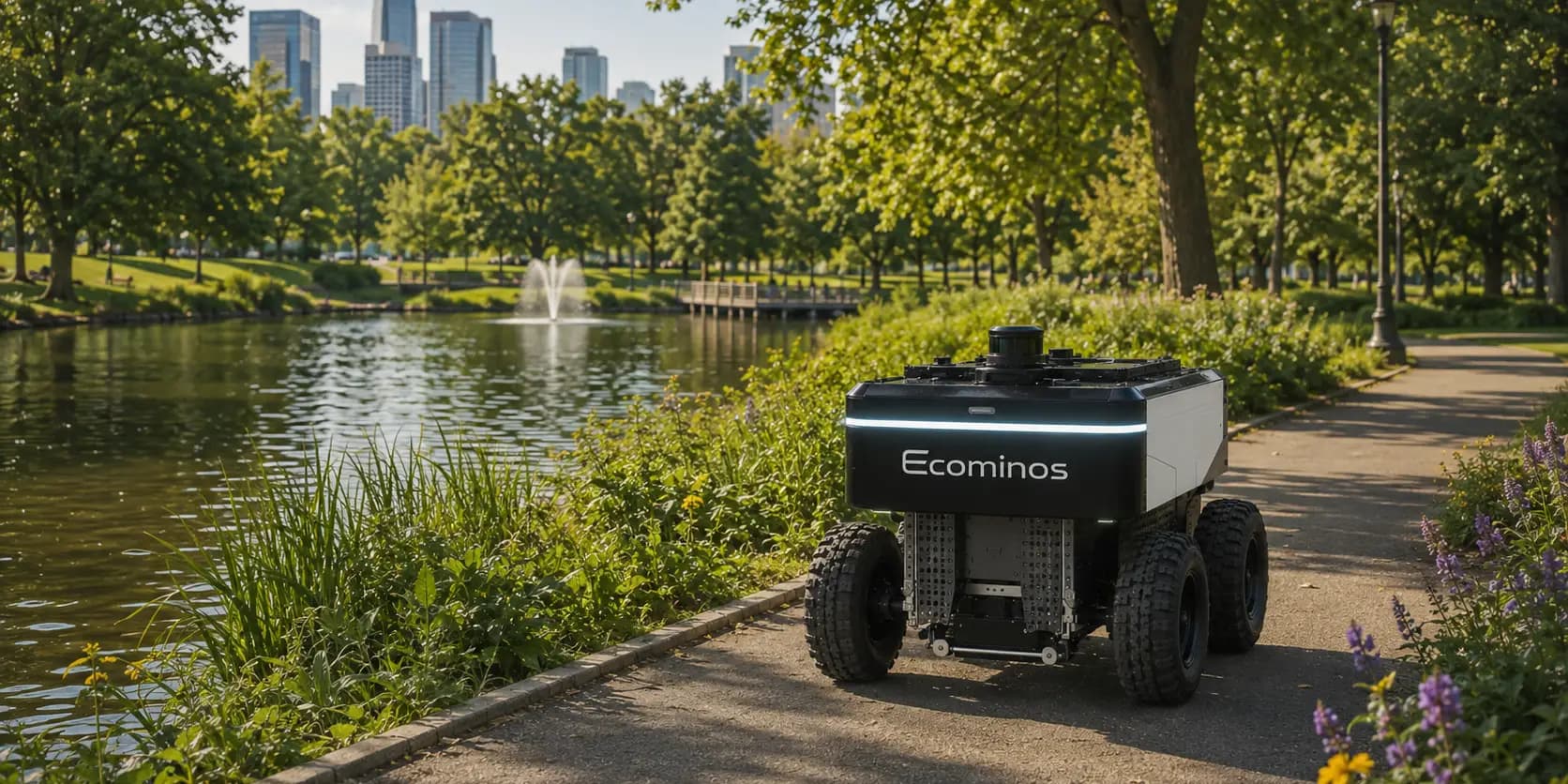
Battery-electric platform with no exhaust at the point of use.
Compact
A 106 x 65 cm footprint in the documented Ecominos configuration.
Modular
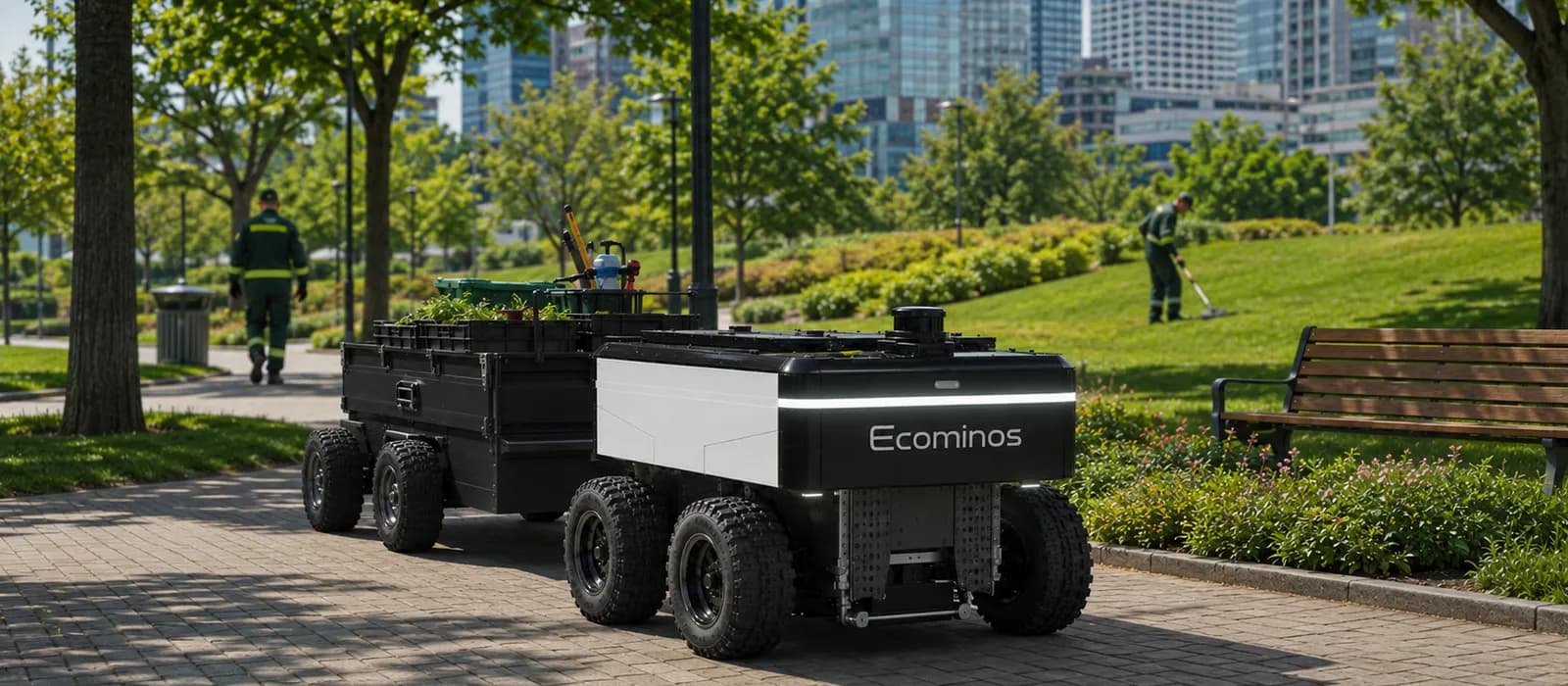
One platform interface for swappable task equipment.
Site-adaptable
Route, task, equipment and supervision conditions are defined together for each operation.
01. Platform capabilities
Move. Maintain. Sense.
The compact platform brings movement, site work and environmental sensing into one operating system. Its configuration follows the site's real route and task.
01
Move
Short material movements may be assessed on defined routes inside managed sites.
02
Maintain
Task-specific equipment may be assessed for repetitive work in green spaces or food-production sites.
03
Sense
Useful, proportionate and permitted mission and environmental signals are defined for each site before collection.
Platform capabilities
Move. Maintain. Sense.
The compact platform brings movement, site work and environmental sensing into one operating system. Its configuration follows the site's real route and task.
01
Move
Short material movements may be assessed on defined routes inside managed sites.
02
Maintain
Task-specific equipment may be assessed for repetitive work in green spaces or food-production sites.
03
Sense
Useful, proportionate and permitted mission and environmental signals are defined for each site before collection.
02. Use cases
Four focus areas for urban operations.
Each area presents a different operating context for a compact robotic platform working on defined routes and tasks.
01
Managed green spaces
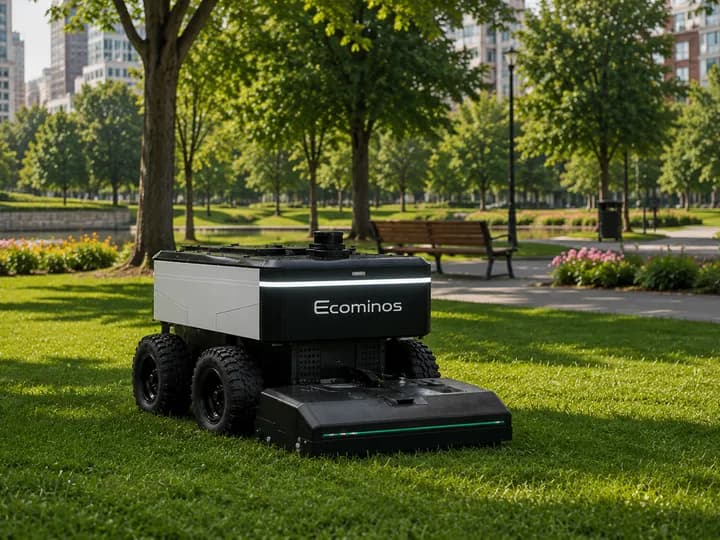
Repetitive transport, maintenance support and environmental observation in parks, nurseries, planted corridors and other managed green spaces.
+Defined routes and operating windows
+Task-specific equipment assessed before use
02
On-site logistics
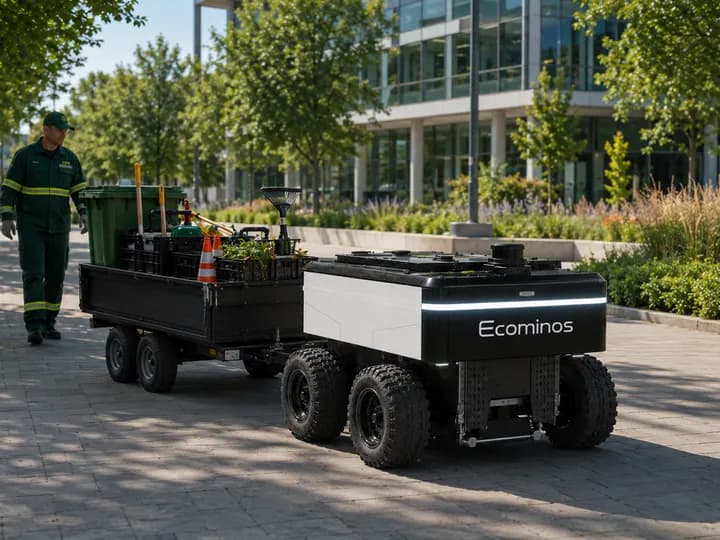
Short material movements between a depot, team and work area inside a controlled site.
+Tools, plants and maintenance supplies
+Bounded routes and agreed supervision
03
Urban food production
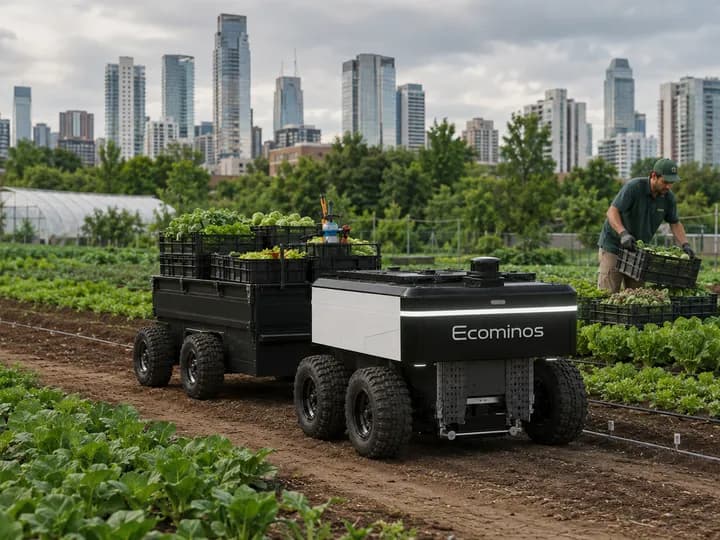
Repetitive field work and material movement in market gardens, nurseries, community growing sites and food production close to cities.
+Row-based work and crop observation
+Harvest and material movement
04
Campus and facility operations
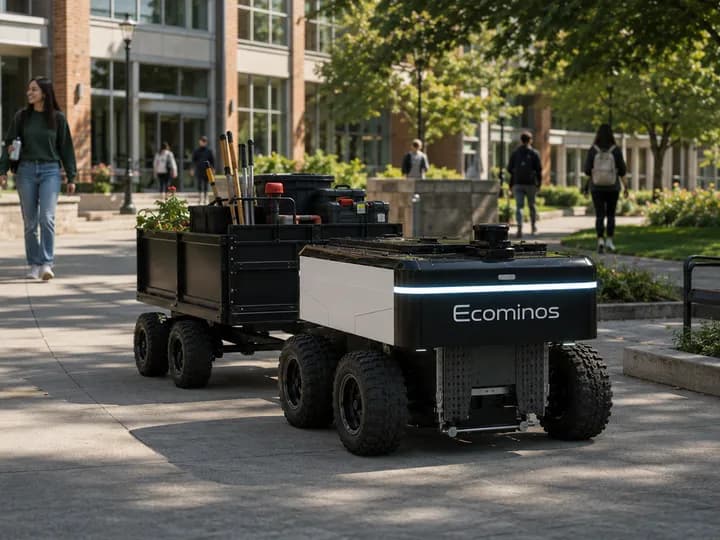
Low-speed movement, site work and environmental observation on bounded campuses and facilities.
+Fixed routes and scheduled operating windows
+Site-owner roles and supervision conditions
Use cases
Four focus areas for urban operations.
Each area presents a different operating context for a compact robotic platform working on defined routes and tasks.
01
Managed green spaces
Repetitive transport, maintenance support and environmental observation in parks, nurseries, planted corridors and other managed green spaces.
+Defined routes and operating windows
+Task-specific equipment assessed before use
02
On-site logistics
Short material movements between a depot, team and work area inside a controlled site.
+Tools, plants and maintenance supplies
+Bounded routes and agreed supervision
03
Urban food production
Repetitive field work and material movement in market gardens, nurseries, community growing sites and food production close to cities.
+Row-based work and crop observation
+Harvest and material movement
04
Campus and facility operations
Low-speed movement, site work and environmental observation on bounded campuses and facilities.
+Fixed routes and scheduled operating windows
+Site-owner roles and supervision conditions
03. Operation design
Every site begins with a clear task.
Route, task, responsibilities and permitted data boundaries are defined from the start, then the platform is configured around that operating framework.
01
Site and route fit
Define boundaries, surface conditions, slope, access and separation from people before operation.
02
Operating responsibilities
Assign preparation, supervision, intervention, maintenance and stop conditions to named roles.
03
Evidence and decision
Set the baseline, measurement method and review owner, then decide whether to stop, revise or continue.
Operation design
Every site begins with a clear task.
Route, task, responsibilities and permitted data boundaries are defined from the start, then the platform is configured around that operating framework.
01
Site and route fit
Define boundaries, surface conditions, slope, access and separation from people before operation.
02
Operating responsibilities
Assign preparation, supervision, intervention, maintenance and stop conditions to named roles.
03
Evidence and decision
Set the baseline, measurement method and review owner, then decide whether to stop, revise or continue.
For your site
Define the first task together.
Share the route, task and operating conditions. The Orbiba team will clarify the suitable platform configuration and next steps with you.